08.09.2026

A small bathroom without a window can be functional, bright, and pleasant to use. The key isn’t just the square footage, but the way color, light, mirrors, tiles, and fixtures are used. When every element has its place, the room feels organized and the interior becomes lighter. That’s why it’s worth knowing, how to visually enlarge a small bathroom and create a design that won’t feel cramped.
Visually enlarging a bathroom doesn’t require an expensive renovation or sacrificing comfort. Sometimes a change in wall color, a larger mirror, better-planned light sources, or swapping bulky furniture for wall-hung models is enough. Thanks to simple tricks, a small space can look much more open, and everyday use will become more comfortable.
The easiest way to visually enlarge a bathroom is to use a light color palette. Light colors reflect light, so the bathroom seems more spacious and visually cleaner. White, light beiges, soft grays, light grays, creams, pastels, or pale green create a calm backdrop and work well in small spaces.
A white bathroom can look fresh and elegant, but it doesn’t have to be sterile. Just add light-toned wood, soft textiles, or subtle accessories to make the interior feel cozier. A monochromatic color palette reduces the number of visual breaks, making the space appear larger. Light shades used on the walls, floor, and furniture connect individual zones, and uniform surfaces organize the entire room.
Dark colors can appear in details, for example on the faucet, handles, or lamp frame, but they shouldn’t dominate. It’s easy to overwhelm a small bathroom with too many contrasts. If you want a stronger accent, use it sparingly so you don’t overpower the space. With limited square footage, it’s better to avoid extensive color compositions and an excess of different materials.
Contrary to popular belief, large tiles suit a small bathroom well. Fewer grout lines create a calmer, more uniform surface that visually enlarges the space. Large tiles minimize divisions, and when laid on the floor and walls, they can subtly blur the boundaries between them.
Choose tiles in a light color with grout close to their shade. This way, the tile pattern won’t divide the interior into small fragments. Tiles over the entire surface aren’t always necessary, but using a single material on large areas helps achieve a cohesive effect. Large-format claddings with a delicate stone, concrete, or marble pattern work particularly well.
High-gloss tiles reflect light and can make a small interior seem brighter. You don’t have to use gloss throughout the entire room, though. A good solution is pairing a glossy wall with a matte, safer floor. This kind of approach helps maintain a balance between aesthetics and functionality.
If the bathroom is narrow, a horizontal layout of rectangular tiles can visually widen it. When the problem is a low ceiling, vertical lines help visually raise the room. In both cases, avoid large, high-contrast decor and overly complex mosaics, which can reduce the clarity of the design.
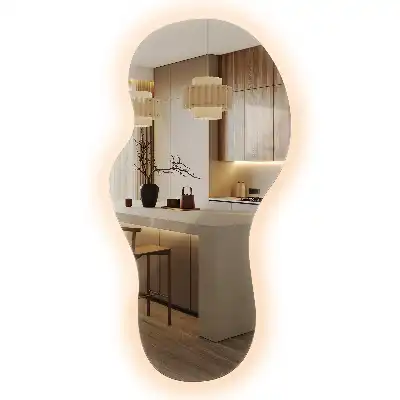
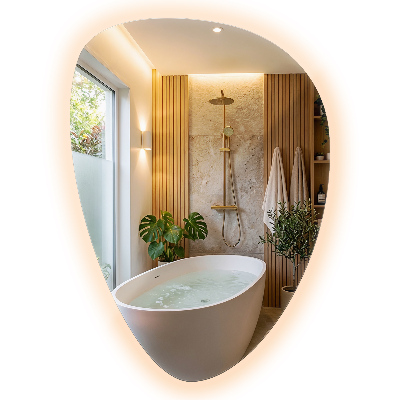
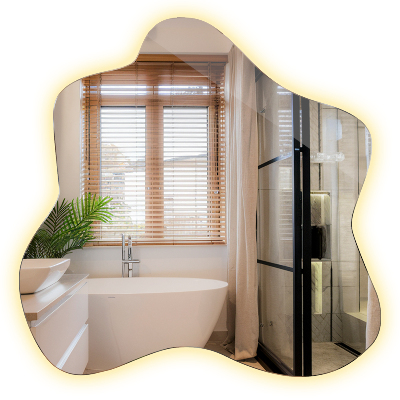
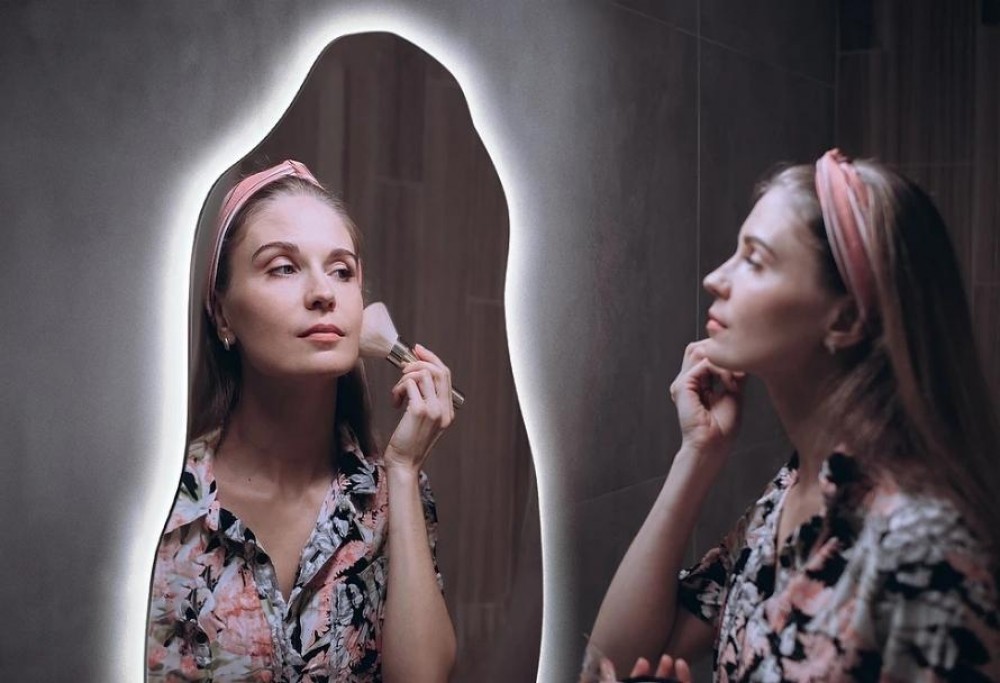
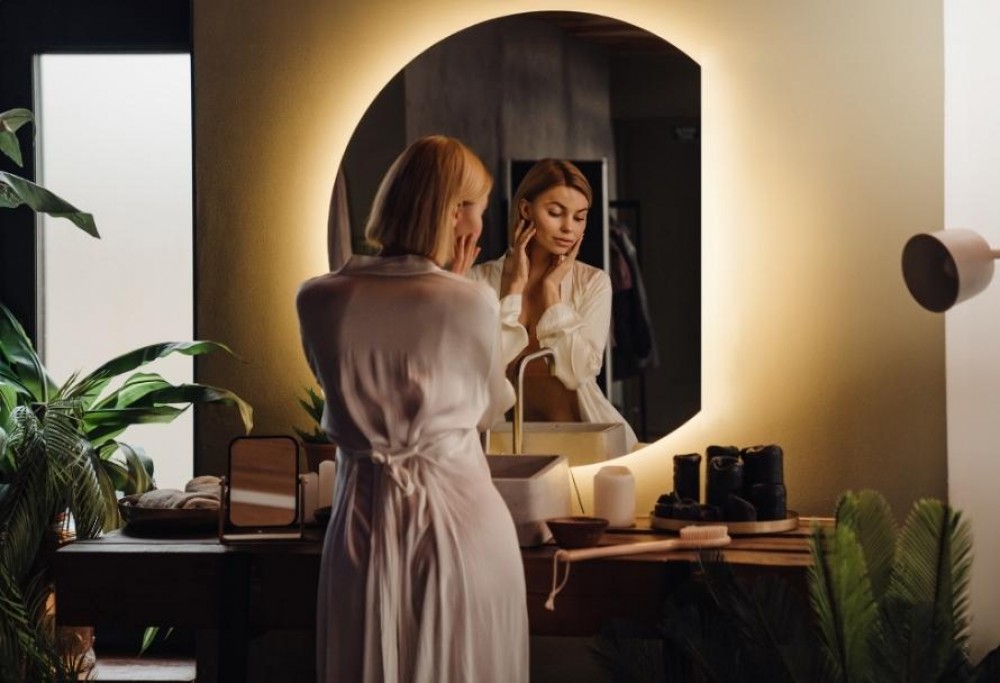
One of the most effective ways to visually enlarge a small bathroom is with mirrors. A large mirror can almost double the visual space because it reflects the opposite side of the room. If you want to enlarge the bathroom with mirrors, choose a pane without a bulky frame, mounted above the sink or across the full width of the wall.
Frameless mirrors offer an especially light effect. They don’t create another boundary and blend smoothly into their surroundings. Large mirrors mounted on furniture also enhance the feeling of a bigger space, especially when they replace traditional cabinet fronts. Thanks to them, you can visually enlarge a small bathroom while also gaining practical storage.
The placement of the mirror also matters. A mirror placed opposite a light source boosts brightness, because mirrors reflect light and spread it around the room. The bathroom then seems not only larger but also fresher. This is especially important in a windowless room, where lighting has to be planned entirely artificially.
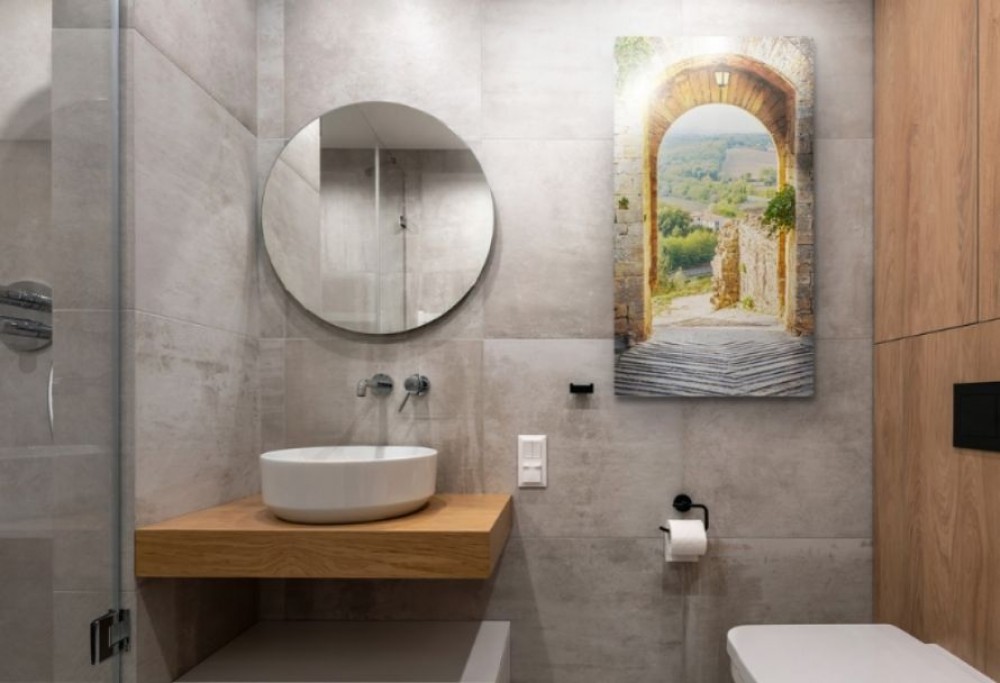
In a bathroom without a window, a single ceiling light is usually not enough. Proper lighting should include several layers: ambient light, task lighting, lights by the mirror, and decorative LED lighting. Using different light sources eliminates dark corners and makes the interior seem larger.
Diffuse lighting fills the space evenly and reduces harsh shadows. It’s worth arranging multi-point lighting to cover the sink area, shower, and storage. Lighting niches, shelves, the bottom of the cabinet, or the mirror adds depth and creates the impression that the walls are farther away.
Cool or neutral LED lighting can visually enlarge the interior, but it shouldn’t feel unpleasantly cold. In the daily grooming area, neutral light that renders colors well works best. A slightly warmer play of light can appear in the relaxation area. It’s important for the color temperature to be consistent throughout the room.
When the interior is evenly lit, its boundaries become less distinct. The space will feel larger if the light fixtures remain discreet and the light reflects off light tiles, mirrors, and smooth fronts.
A bulky shower enclosure with a high base can strongly divide a small bathroom. Shower enclosures with transparent glass work much better. Clear glass doesn’t block the view of the rest of the room, so the entire space remains visible.
A walk-in enclosure with a linear drain is a great solution. Without a shower base, you can run the same flooring throughout the bathroom, which reduces the number of visual breaks. This trick visually enlarges the interior, gives it a modern character, and makes it easier to keep clean.
Minimalist shower enclosures with transparent glass look light and increase user comfort. Their simple construction doesn’t dominate the design. In a very small footprint, sliding or folding doors that don’t need clearance to open can also be a good choice.
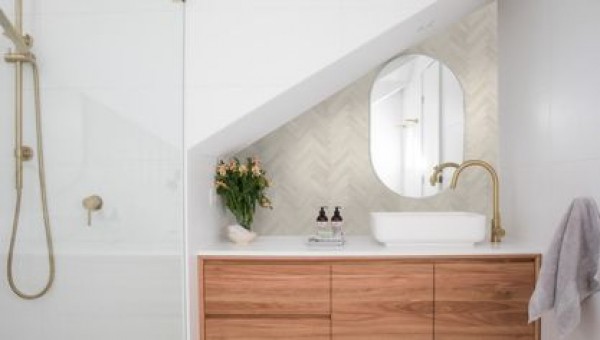
In a small bathroom, every visible bit of floor matters. Wall-hung toilets, sinks, and cabinets reveal more flooring, making the room feel larger. Wall-hung furniture visually enlarges the bathroom and also makes cleaning easier.
Minimalist forms, smooth fronts, and concealed handles enhance the sense of order. Light wood finishes warm up the design without taking away its lightness. Set-back toe kicks can also make built-ins look less bulky. When choosing equipment, remember that elements in a small bathroom should match the scale of the space.
Minimize the number of pieces, but don’t give up on storage. One well-designed cabinet is better than several random shelves. Open shelves look decorative, but too many cosmetics and accessories quickly create clutter. An organized space always feels larger.
To furnish a small bathroom comfortably, it’s worth using the room height, niches, and the space above the in-wall toilet frame. Built-ins reaching the ceiling hold more items than several low cabinets, and their smooth front can create a uniform plane.
Thoughtful solutions include a mirrored cabinet above the sink, shallow tall cabinets, drawers with organizers, and storage hidden in built-ins. Everyday cosmetics should be easy to reach but not necessarily visible. The fewer small items left out, the calmer the interior will feel.
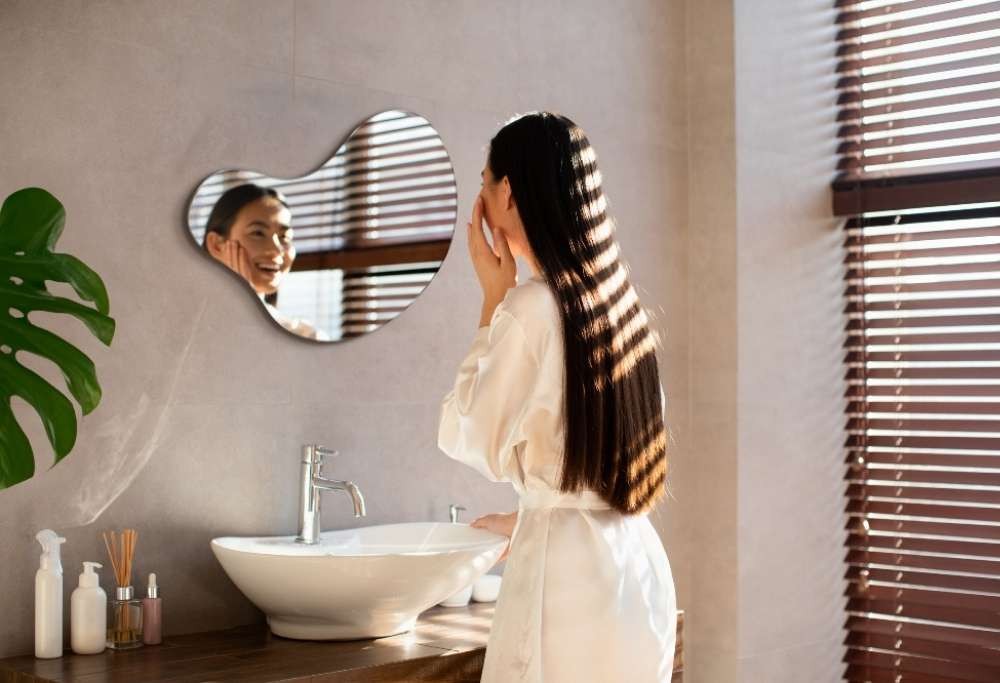
It’s also worth limiting the number of decorations. In a small bathroom, one interesting detail is enough, for example a lamp, a plant, an art print, or an elegant dispenser. Too many extras can overwhelm a small space and draw attention away from its proportions.
Doors that open inward take up valuable space. If the layout allows, it’s better to use a model that opens outward or a sliding door. A light-colored door matched to the wall color will reduce contrast and won’t visually close off the interior.
Frosted glazing that lets light in from the hallway while maintaining privacy can also be a good idea. This solution is especially useful in a bathroom without a window because it increases the amount of daylight reaching the interior.
Not every trendy design works in a small footprint. A common mistake is combining many patterns, colors, and textures. An excess of different materials makes the eye stop at numerous boundaries, and the small space looks even smaller.
Other problems include bulky floor-standing cabinets, dark enclosures, contrasting grout lines, and a single weak light source. In a small bathroom, avoid large decorations, heavy frames, and overly wide furniture. This doesn’t mean giving up character, but making a conscious choice of details.
It’s also worth using gloss in moderation. Shiny elements enlarge the space because they reflect light, but used everywhere they can create unpleasant glare. The best effect comes from a balance between matte and glossy surfaces.
If you’re wondering how to visually enlarge a small bathroom, start by organizing the interior and choosing a light, cohesive palette. Just a few well-chosen changes can deliver a clear result. Light colors help enlarge the space, mirrors add depth, and minimalist furniture streamlines the design. With simple tricks, you can visually enlarge a small space without compromising its functionality.
Consistency is key. Visual enlargement of the space works best when colors, materials, lighting, and fixtures create a single composition. When each element supports the same goal, the interior becomes brighter, lighter, and more comfortable.